

BBA AVIATION
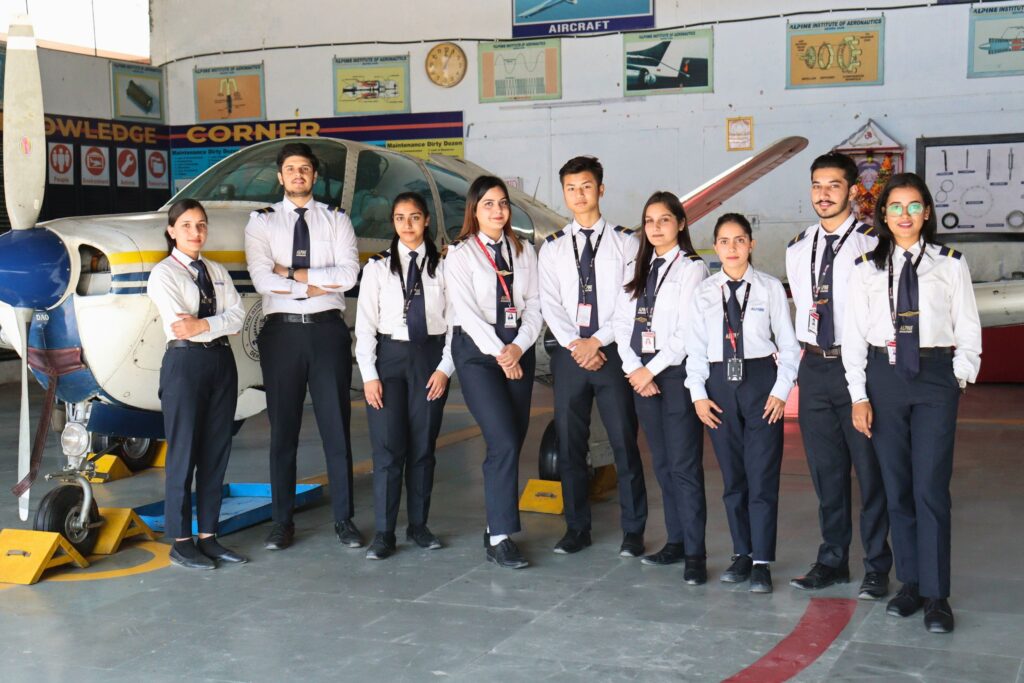

WHAT IS BBA AVIATION?
The BBA Aviation course in India is a specialized undergraduate program designed to equip
students with both business management expertise and aviation industry knowledge. Over
a three-year, six-semester curriculum, it prepares students for a variety of roles such as airport
manager, airline operations executive, aviation safety officer, and cargo handling
supervisor. Unlike pilot training, this course focuses on the management and administrative
aspects of aviation, making it ideal for those who want to be part of the aviation industry
without becoming flight crew.
During the program, students gain in-depth knowledge of airport management systems,
airline scheduling and ticketing, aviation safety regulations, passenger service protocols,
and cargo logistics management. These modules are carefully designed to meet
International Civil Aviation Organization (ICAO) and Directorate General of Civil Aviation
(DGCA) standards, ensuring that graduates can work in both domestic and international
aviation markets.
One of the defining features of a BBA Aviation degree is its global applicability. Aviation
industry practices — from air traffic control to airport security — are standardized worldwide.
This means that the skills students learn in India can easily be applied in other countries,
opening doors to international aviation careers in hubs like Dubai, Singapore, Doha, London,
and Sydney.
In addition to classroom instruction, most BBA Aviation programs offer industry internships
with airlines, airports, and cargo operators. This hands-on exposure allows students to apply
theoretical concepts to real-world situations, develop practical problem-solving skills, and build
professional networks that help in securing top aviation jobs after graduation.
WHY CHOOSE BBA AVIATION?
Choosing a BBA in Aviation Management is an investment in a career that combines global
exposure, high growth potential, and long-term job security. The aviation industry is one of
the fastest-growing sectors in the world, and India is at the center of this growth. According to
industry projections, India is set to become the third-largest air passenger market globally,
creating thousands of new aviation jobs every year. This growth is fueled by increased
domestic travel, the expansion of low-cost carriers, and major investments in airport
infrastructure across the country. For students who want a professional path with stability and
exciting prospects, BBA Aviation offers the perfect platform.
Unlike a traditional business degree, the BBA Aviation course is designed specifically for the
needs of the aviation industry. The curriculum includes specialized subjects like airport
operations, airline management, aviation law, safety protocols, and cargo logistics, giving
students an in-depth understanding of the sector. This tailored approach ensures graduates are
industry-ready, with the skills employers in airlines, cargo companies, airport service
providers, and ground handling agencies are actively seeking. The aviation-specific training
gives students a competitive edge in the job market over general BBA graduates.
One of the biggest advantages of pursuing BBA Aviation in India is the global career potential
it offers. Aviation is a universally connected industry, and operational processes are
standardized across countries. This means that a graduate trained in aviation operations,
safety, and management in India can seamlessly work in international airports in Dubai,
Singapore, London, or New York without retraining. Many BBA Aviation graduates go on to
secure jobs with leading international airlines, global logistics companies, and
multinational airport operators, offering not just better salaries but also the opportunity to live
and work abroad.
Additionally, the aviation industry offers a work environment that is dynamic, fast-paced, and
diverse. No two days are the same, and professionals get to interact with people from different
cultures, manage real-time operational challenges, and be part of an industry that literally
connects the world. With a BBA in Aviation Management, students enter a field that offers not
only financial rewards but also personal satisfaction, career advancement opportunities, and the
prestige of working in one of the most respected global industries.
INDUSTRY GROWTH & SCOPE
The AVIATION INDUSTRY IN INDIA has grown exponentially over the last decade, driven by
increased air travel demand, low-cost carriers, and international tourism. With the
government investing heavily in airport infrastructure and private airline expansion, the
scope for aviation professionals is only set to increase.
Globally, the aviation industry employs millions, offering career options in aviation logistics,
ground operations, airport customer service, flight scheduling, safety management, and
aviation consulting.
BBA AVIATION COURSE DURATION & STRUCTURE
The BBA AVIATION DEGREE is a three-year program divided into six semesters. Each
semester includes both core management subjects and specialized aviation modules.
First Year: Fundamentals of management, business communication, economics, and an
overview of the aviation industry.
Second Year: Airline operations, cargo management, airport security, customer service
excellence, and aviation law.
Third Year: Aviation safety, strategic management, global aviation trends, and aviation
marketing.
SKILLS REQUIRED FOR SUCCESS IN AVIATION
To excel in aviation careers, students should develop:
● Excellent communication skills for customer-facing roles.
● Analytical and problem-solving skills for operational efficiency.
● Leadership and management skills for supervising teams.
● Adaptability to work in a fast-changing environment.
● Cultural awareness for interacting with international passengers.
BBA AVIATION ELIGIBILITY & ADMISSION PROCESS
Students must have completed 10+2 (any stream) from a recognized board with a minimum of
45–50% marks.
The BBA Aviation admission process in many colleges is merit-based or through direct
admission. Some universities may conduct interviews or aptitude tests to assess
communication and general awareness. Management quota seats are also available in private
institutions.
BBA AVIATION SYLLABUS & SUBJECTS
Key subjects in BBA Aviation programs include:
● Principles of Management
● Airline Operations
● Cargo & Logistics Management
● Aviation Law
● Airport Security & Safety
● Customer Relationship Management
● Aviation Risk Management
● International Business in Aviation
INTERNSHIP & INDUSTRY TRAINING
One of the biggest advantages of BBA Aviation courses is the mandatory internship and
industry exposure. Students get the chance to train in airports, airline offices, cargo
handling units, and ground service companies.
This hands-on experience helps in developing real-world skills, building industry contacts,
and increasing job placement chances after graduation.
CAREER OPPORTUNITIES AFTER BBA AVIATION
Graduates can work in roles such as:
● Airport Operations Manager
● Airline Customer Service Executive
● Cargo Operations Manager
● Flight Dispatcher
● Aviation Safety Officer
● Ground Handling Supervisor
With experience, they can progress to senior aviation management positions in airports,
airlines, aviation consultancies, and global logistics firms.
TOP RECRUITERS FOR BBA AVIATION GRADUATES
Some leading recruiters include:
● IndiGo Airlines
● Air India
● SpiceJet
● Vistara
● Qatar Airways
● Emirates
● GMR & GVK Airport Services
● Blue Dart Aviation
FUTURE STUDY OPTIONS AFTER BBA AVIATION
Graduates can pursue:
● MBA in Aviation Management
● Post Graduate Diploma in Airport Management
● International Aviation Certifications
● Logistics & Supply Chain Management Programs
BBA AVIATION SALARY EXPECTATIONS
Freshers earn between ₹4–8 LPA, while experienced professionals can earn ₹15–20 LPA with
additional perks like free travel, accommodation, and allowances. International postings
usually offer higher pay packages.
Frequently Asked Questions (FAQs) – BBA Aviation
1. What is BBA Aviation?
BBA Aviation is a three-year undergraduate degree that focuses on aviation management,
airport operations, airline services, and aviation administration. It equips students with both
business management skills and specialized aviation knowledge, preparing them for
high-demand roles in airlines, airports, cargo handling, and aviation consultancy.
2. What is the eligibility for BBA Aviation in India?
Students must have completed 10+2 (any stream) from a recognized board with at least
45–50% marks. Some universities may require aptitude tests or interviews, while many
institutions offer direct admission or management quota seats.
3. Is NEET required for BBA Aviation admission?
No, NEET is not required for BBA Aviation admissions. Selection is usually merit-based or
through direct admission, depending on the institution’s policy.
4. How long is the BBA Aviation course?
The BBA Aviation degree is a three-year program divided into six semesters. Each
semester covers core business subjects and specialized aviation modules like airline
operations, airport security, aviation safety, and cargo management.
5. What subjects are taught in BBA Aviation?
The BBA Aviation syllabus includes Principles of Management, Airline Operations, Aviation
Law, Cargo & Logistics Management, Customer Relationship Management, Airport Security &
Safety, Aviation Risk Management, and International Business in Aviation.
6. Does BBA Aviation include internships?
Yes. Internships and industry training are a key part of the program. Students gain hands-on
experience at airports, airline offices, cargo units, and ground handling agencies, helping them
build industry contacts and improve job placement chances.
7. What career options are available after BBA Aviation?
Graduates can work as Airport Operations Managers, Flight Dispatchers, Cargo
Operations Managers, Ground Handling Supervisors, Aviation Safety Officers, Airline
Customer Service Executives, and more. With experience, they can advance to senior
aviation management roles.
8. Which companies hire BBA Aviation graduates?
Top recruiters include IndiGo Airlines, Air India, SpiceJet, Vistara, Qatar Airways,
Emirates, GMR Airport Services, GVK Airport Services, and Blue Dart Aviation.
9. Can I pursue higher education after BBA Aviation?
Yes, graduates can opt for MBA in Aviation Management, PG Diploma in Airport
Management, International Aviation Certifications, or Logistics & Supply Chain
Management programs.
10. What is the average salary after BBA Aviation?
Freshers typically earn between ₹4–8 LPA, while experienced professionals can earn ₹15–20
LPA. International roles often offer higher salaries with additional benefits like travel and
accommodation.
Courses you might be interested in